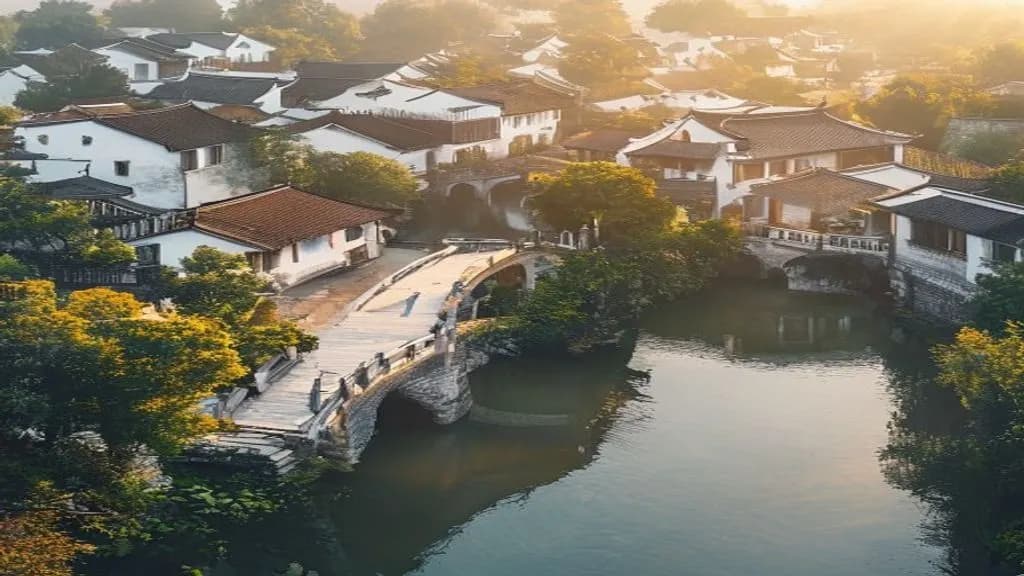
Suzhou's nine UNESCO-listed classical gardens — including the Humble Administrator's Garden and the Master of Nets Garden — are considered the finest examples of traditional Chinese landscape design. Threaded by a 2,500-year-old canal network that earned the city its 'Venice of the East' nickname, Suzhou pairs refined garden culture with a centuries-old silk weaving tradition and an easy 30-minute high-speed rail connection from Shanghai.
Flavour Profile
Best time to visit
🗓 March-May, September-November
Province
📍 Jiangsu
Tier
Hidden GemAbout Suzhou
Suzhou's canal-and-garden character has roots going back to 514 BC, when the state advisor Wu Zixu laid out the city's waterways under orders from King Helü of Wu, designing a network that handled transport, irrigation, and defence at once — the same basic layout still visible in the Gusu district today, giving Suzhou a fair claim to being one of the oldest continuously inhabited cities in the Yangtze basin. Private gardens began appearing here as early as the 4th century, but it was between the Ming and Qing dynasties, especially the 18th century, that Suzhou's garden-building reached its peak, as retired officials and wealthy merchants competed to compress mountains, water, and pavilions into walled plots barely the size of a city block.
That competition produced the gardens UNESCO recognised in 1997 and 2000 — eight sites within Suzhou plus a ninth in the nearby canal town of Tongli, together representing the fullest surviving record of the Suzhou garden style. The Humble Administrator's Garden, the largest of the group, centres its pavilions around a lake meant to be viewed from different angles as you walk; the Master of Nets Garden, by contrast, is deliberately small and intimate, using narrow sightlines and courtyard walls to make a compact space feel layered. Both differ sharply from Lingering Garden's dense corridor-and-rockery design — seeing more than one in the same trip is the only way to appreciate how varied "classical Chinese garden" actually means.
Suzhou is also a working silk-weaving city with a tradition stretching back over a thousand years, still visible in workshops around the old town. High-speed rail puts it about 30 minutes from Shanghai, making it an easy day trip, though staying overnight lets you walk the canal-side lanes of Pingjiang Road after the tour groups leave. March to May and September to November bring the mildest weather and the gardens' best light.
What to Eat in Suzhou
Squirrel Fish
松鼠鳜鱼
Deep-fried mandarin fish shaped like a squirrel, draped in sweet-sour sauce
Crab Roe Noodles
蟹黄面
Egg noodles lavished with golden autumn crab roe and butter
Explore Suzhou by theme
Highlights
Humble Administrator's Garden
→The largest of Suzhou's UNESCO-listed classical gardens, its pavilions and covered walkways arranged around a central lake.
Master of Nets Garden
→The smallest and most intimate of Suzhou's classical gardens, using narrow sightlines and courtyard walls to make a compact space feel much larger than it is.
Lingering Garden
→A dense, maze-like garden built around covered corridors and elaborate limestone rockeries, another of the nine UNESCO-listed sites.
Pingjiang Road
→A canal-side historic street in the old Gusu district, lined with whitewashed houses, stone bridges, and small teahouses along Suzhou's original waterway grid.
Book Experiences in Suzhou
Nearby Cities
AI Trip Planner
Planning a trip to Suzhou?
Tell our AI your travel style and get a personalised itinerary in seconds
✨ Build my itinerary