Yunnan, China
Da Li
Lac Erhai, culture Bai et air de montagne
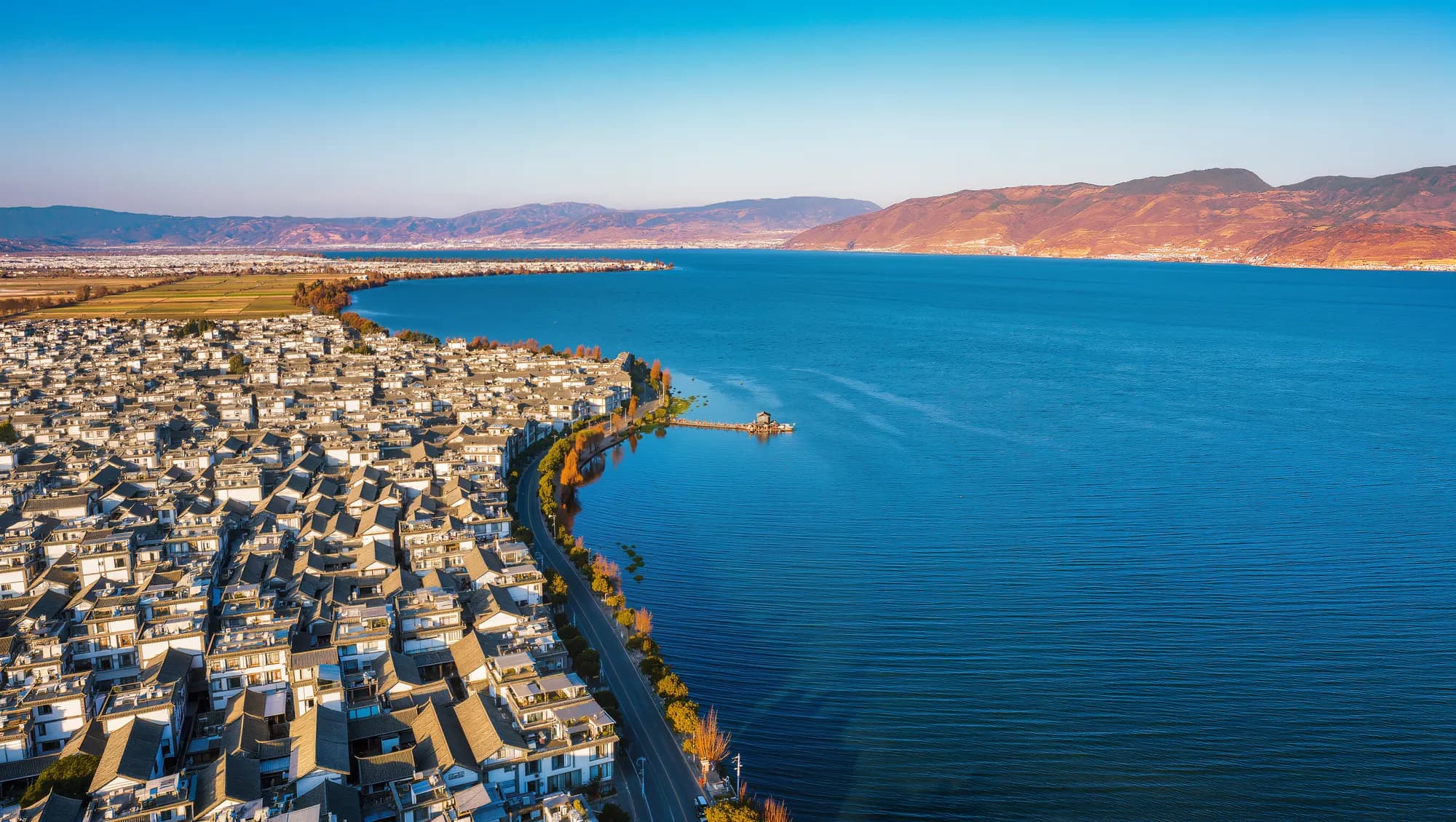
Dali est niché entre les monts Cangshan et le lac Erhai dans l'ouest du Yunnan, avec un rythme de vie si paisible que les visiteurs y restent bien plus longtemps que prévu. Les maisons à cour aux murs blancs de la vieille ville appartiennent à la minorité Bai locale, donnant à Dali une texture culturelle unique en Chine. C'est aussi la base idéale pour explorer plus profondément le Yunnan.
Flavour Profile
Meilleure période pour visiter
🗓 Mars à mai, septembre à novembre
Province
📍 Yunnan
Tier
Trésor cachéAbout Dali
The Three Pagodas at Chongsheng Temple are Dali's oldest visible landmark by a wide margin. The tallest, the 69.13-metre Qianxun Pagoda, was built between 823 and 840 AD under the Nanzhao Kingdom — the regional Tang-era power that once controlled much of what is now Yunnan — while the two smaller, 42.19-metre pagodas flanking it were added later, during the 12th-century reign of the Dali Kingdom's Duan rulers. All three have stood through more than a millennium of earthquakes in a seismically active part of Yunnan, a fact that's as much a feat of engineering as of preservation.
That layered history — Nanzhao, then the independent Dali Kingdom, then eventual absorption into the Chinese empire — is also why Dali feels culturally distinct from the rest of Yunnan. The Bai ethnic minority, whose white-walled courtyard houses define the old town, trace their presence here back through both kingdoms, and their marble-work and tie-dye textile traditions remain active crafts rather than museum pieces. The old town itself, gridded and walled, is compact enough to explore on foot in a single day, though most visitors end up staying longer than planned.
Geography does a lot of the work, too: Dali sits in a narrow band between the Cangshan mountain range and Erhai Lake, one of China's largest freshwater lakes, giving nearly every street a view of one or the other. That position also makes Dali the natural staging point for trips further into western Yunnan — Lijiang, Shangri-La, and the eastern edge of the Tibetan Plateau are all reachable from here. March to May and September to November bring the clearest mountain views and the most comfortable temperatures.
What to Eat in Dali
Three-Course Tea
三道茶
Bitter, sweet, then lingering — a Bai minority tea ceremony with deep meaning
Sour Papaya Salad
酸木瓜
Shredded green papaya tossed with chilli, lime, and fresh mint
Découvrir Dali par thème
Incontournables
Three Pagodas, Chongsheng Temple
→Three Tang- and Dali-Kingdom-era pagodas at Chongsheng Temple, the tallest standing 69.13 metres, that have survived more than a thousand years of regional earthquakes.
Dali Old Town
→A walled, gridded old town of white Bai-minority courtyard houses, stone-paved lanes, and small workshops selling marble and tie-dye textiles.
Erhai Lake
→One of Yunnan's largest lakes, ringed by Bai fishing villages and cycling paths, with the Cangshan mountains rising directly behind it.
Cangshan Mountains
→A 19-peak range running along Dali's western edge, snow-capped for part of the year, with a cable car and hiking trails up to alpine scenery.
Nearby Cities



AI Trip Planner
Planning a trip to Dali?
Tell our AI your travel style and get a personalised itinerary in seconds
✨ Build my itinerary