Fujian, China
Xia Men
Charme colonial insulaire et culture côtière
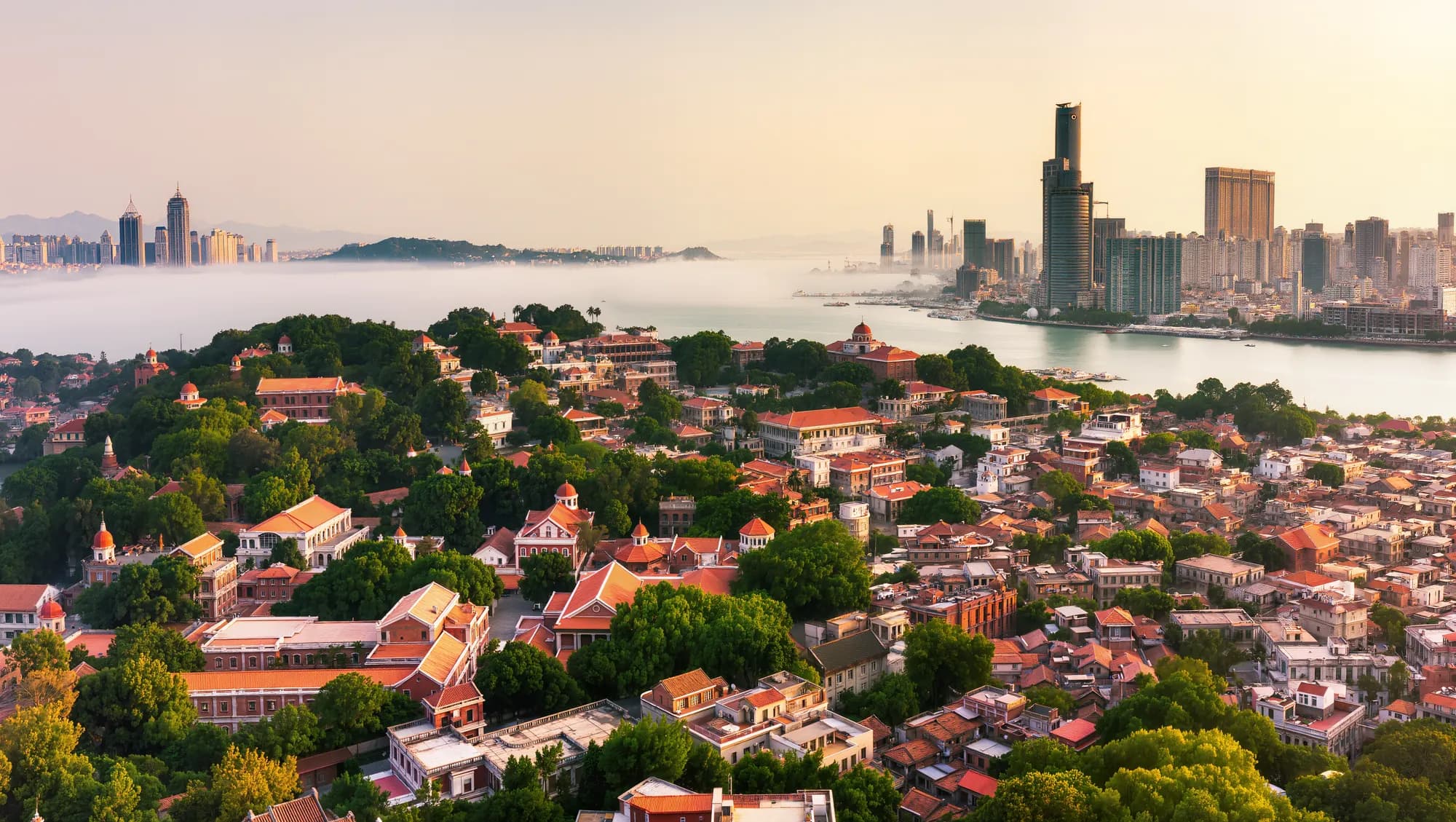
L'île de Gulangyu à Xiamen, classée au patrimoine mondial de l'UNESCO, est un havre sans voitures de villas coloniales, de musique de piano et de ruelles fleuries de bougainvilliers. La ville mêle le patrimoine Minnan (Fujian du Sud) à une scène de cafés animée et aux meilleurs fruits de mer du pays, sous un climat subtropical agréable toute l'année.
Flavour Profile
Meilleure période pour visiter
🗓 Octobre à décembre, mars à avril
Province
📍 Fujian
Tier
Trésor cachéAbout Xiamen
Gulangyu's road to UNESCO status took nearly a decade: China first submitted the island's application in 2008, and in July 2017 it was finally inscribed as the 52nd Chinese site on the World Heritage List. What earned it the listing is the island itself — an 8.86-square-kilometre enclave a five-minute ferry ride from downtown Xiamen, closed to cars and built up between the 1840s and 1930s by an unusual mix of Western consulates, missionaries, and returning overseas Chinese merchants who pooled European, Southeast Asian, and local Minnan architectural styles into one settlement. Wandering its lanes today means passing gothic church spires, Spanish-tiled verandas, and red-brick Fujianese courtyard houses within a few hundred metres of each other, with only the occasional electric patrol cart breaking the quiet.
That mix of cultures also gave Gulangyu its nickname, Piano Island: wealthy 19th- and 20th-century residents imported pianos in numbers unmatched elsewhere in China, a legacy now preserved at the Piano Museum inside Shuzhuang Garden, a seaside villa built in 1913 by local businessman Lin Erjia and donated to the public in 1955. Since 2000 it has displayed close to 100 historic pianos. On the main island, South Putuo Temple traces its origins to a Tang-dynasty shrine, was renamed and rebuilt across the Song and Qing dynasties, and takes its name from its role as a southern counterpart to the Guanyin pilgrimage site on Zhejiang's Mount Putuo — it now sits directly beside the gates of Xiamen University, one of China's most scenic campuses.
Beyond its heritage sites, Xiamen runs on Minnan (Southern Fujian) food culture — oyster omelettes, peanut soup, and seafood pulled straight from the strait — and a subtropical climate mild enough to visit most of the year, though October to December and March to April avoid both summer humidity and the busiest holiday crowds. Zhongshan Road and the Shapowei art district give a lower-key alternative to Gulangyu's day-trip crowds, worth an evening if the island itself gets busy.
What to Eat in Xiamen
Oyster Omelette
蚵仔煎
Crispy egg-and-starch pancake studded with plump oysters, Hokkien classic
Satay Noodles
沙茶面
Chewy noodles in a rich peanut-and-seafood broth with a Southeast Asian twist
Peanut Soup
花生汤
Velvety, lightly sweetened peanut dessert soup — the ultimate afternoon treat
Découvrir Xiamen par thème
Incontournables
Gulangyu Old Town
→A car-free, UNESCO-listed island of colonial consulates, church spires, and red-brick Fujianese courtyard houses, reachable by a five-minute ferry from downtown Xiamen.
Piano Museum, Shuzhuang Garden
→A seaside villa-turned-garden housing close to 100 historic pianos, the legacy of Gulangyu's nickname as 'Piano Island'.
Sunlight Rock
→The highest point on Gulangyu Island, reached by a short climb up stone steps to a panoramic lookout over Xiamen and the strait.
South Putuo Temple
→A working Buddhist temple dedicated to Guanyin, rebuilt across the Song and Qing dynasties, standing directly beside the gates of Xiamen University.
Book Experiences in Xiamen
Nearby Cities


AI Trip Planner
Planning a trip to Xiamen?
Tell our AI your travel style and get a personalised itinerary in seconds
✨ Build my itinerary