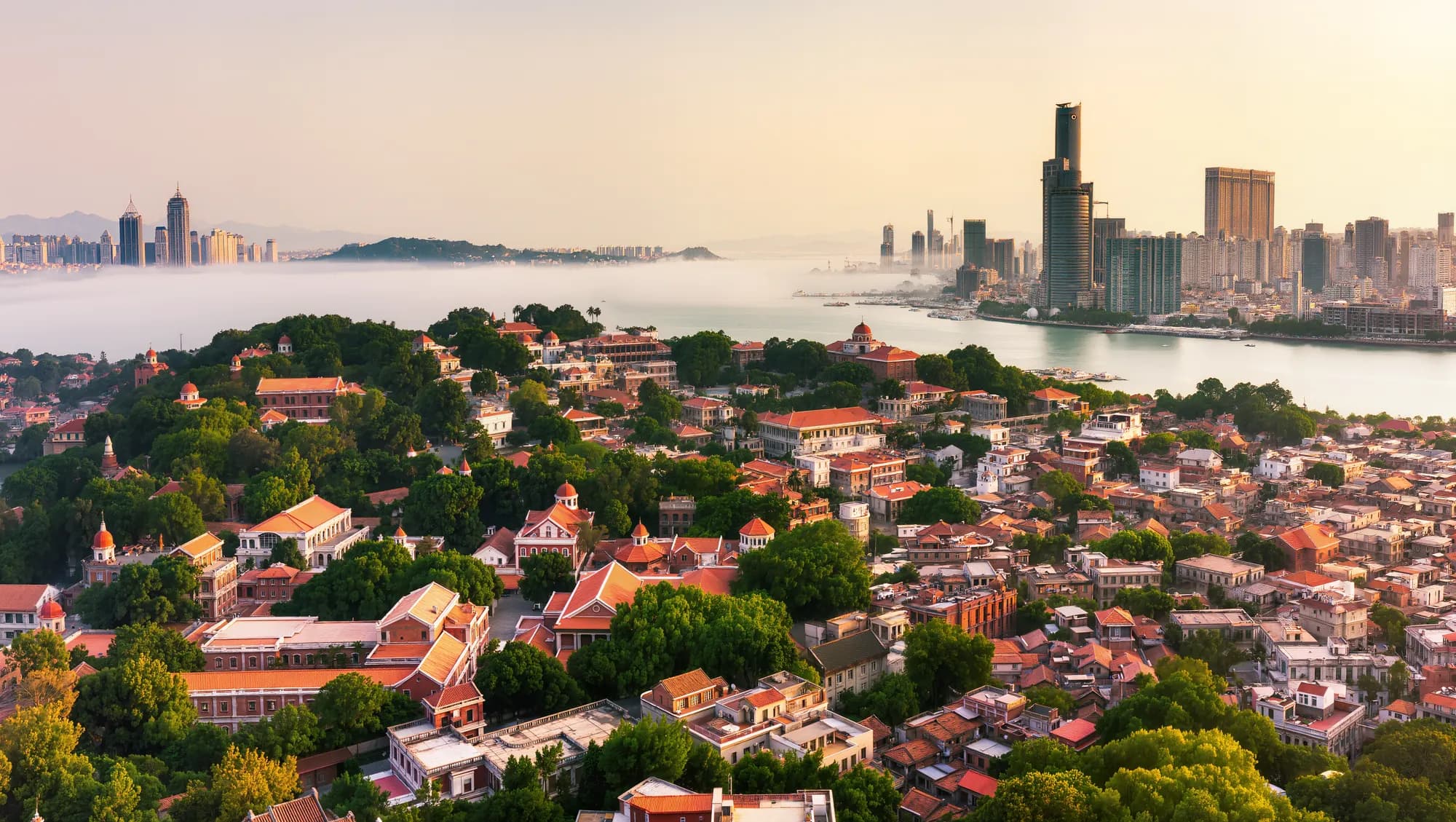
 📷 Windmemories · CC BY-SA 4.0
Fujian, China
Quan Zhou
La capitale chinoise de la Route maritime de la Soie
Quanzhou fut autrefois l'un des ports les plus fréquentés du monde — le terminus oriental de la Route maritime de la Soie, où marchands arabes, perses, juifs et sud-asiatiques vivaient aux côtés des commerçants chinois pendant des siècles. Son quartier ancien classé à l'UNESCO abrite mosquées, temples hindous et sanctuaires taoïstes à quelques pas les uns des autres — un témoignage vivant de la mondialisation médiévale que la plupart des touristes ignorent complètement.
Flavour Profile
Meilleure période pour visiter
🗓 Octobre à avril
Province
📍 Fujian
Tier
Trésor cachéAbout Quanzhou
Quanzhou's UNESCO inscription, granted in July 2021 under the name "Quanzhou: Emporium of the World in Song-Yuan China," covers 22 separate sites and monuments across the city rather than a single landmark — recognition of the port's role as one of the busiest harbours on earth during the Song (960-1279) and Yuan (1271-1368) dynasties, when it was known to foreign traders as Zayton. Arab, Persian, Jewish, and South Asian merchant communities lived here alongside Chinese traders for centuries, leaving behind mosques, Hindu temple fragments, and Taoist shrines within easy walking distance of one another — a density of religious diversity that has no real equivalent elsewhere in China.
Kaiyuan Temple anchors the old city both physically and historically: founded in 686 during the Tang dynasty, its twin stone pagodas are five-storey, octagonal structures that remain the tallest surviving pair from the Song dynasty anywhere in China. A short walk away, Qingjing Mosque, founded in 1009, is the oldest mosque still standing in the country — a direct physical trace of the Arab and Persian trading communities that made Quanzhou their home during the city's medieval peak.
On the harbour's edge, Luoyang Bridge — built in 1053 and later described by Marco Polo in his own travel accounts — remains one of China's most celebrated ancient bridges, engineered with a then-novel foundation technique using cultivated oyster beds to bind the stone piers together. Quanzhou's old quarter rewards unhurried walking more than any checklist of sights; October through April brings the mildest weather for exploring it on foot.
What to Eat in Quanzhou
Oyster Noodles
蚵仔面线
Vermicelli in a thick, starchy broth dotted with plump fresh oysters
Spring Roll Crepes
润饼
Rice-skin wraps loaded with peanuts, braised vegetables, and five-spice
Découvrir Quanzhou par thème
Incontournables
Kaiyuan Temple
→A Tang-dynasty Buddhist temple founded in 686, home to twin five-storey stone pagodas that are the tallest surviving pair from the Song dynasty in China.
Qingjing Mosque
→The oldest mosque still standing in China, founded in 1009, with Arab-influenced stone architecture unlike any other religious building in Quanzhou.
Luoyang Bridge
→A stone sea-crossing bridge built in 1053, engineered with an oyster-shell foundation technique and later documented by Marco Polo.
Old City Quarter
→The historic core of Quanzhou, where mosques, Taoist shrines, and Buddhist temples sit within a few streets of each other.
Nearby Cities

AI Trip Planner
Planning a trip to Quanzhou?
Tell our AI your travel style and get a personalised itinerary in seconds
✨ Build my itinerary