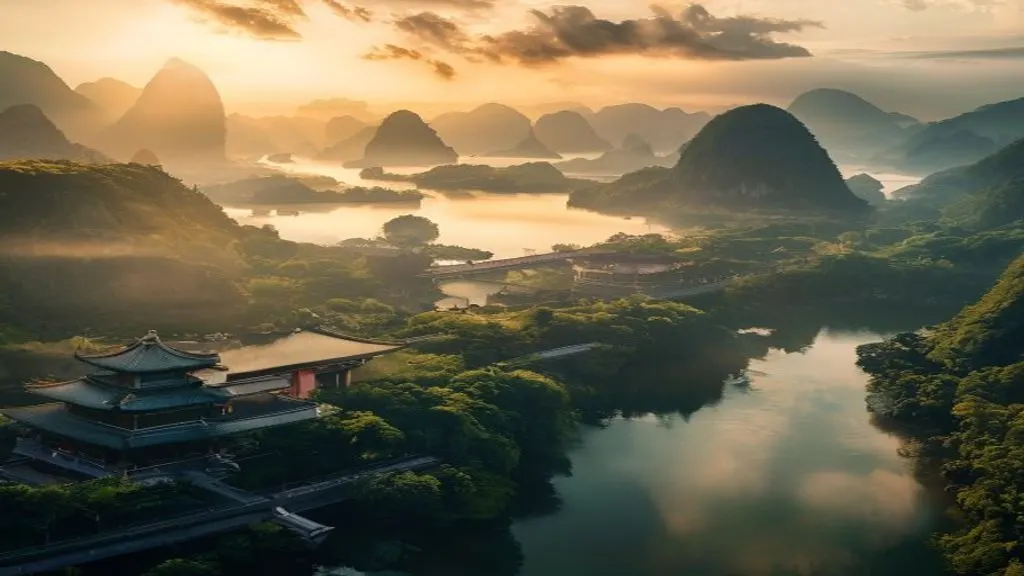
Guiyang est la porte d'entrée du Guizhou, l'une des provinces les plus sous-estimées de Chine. La cuisine du Guizhou repose sur une trinité de saveurs acides, parfumées et intensément pimentées — distincte du mala anesthésiant du Sichuan ou de la chaleur sèche du Hunan. La sauce pimentée Lao Gan Ma, présente dans les cuisines du monde entier, y a été inventée.
Flavour Profile
Meilleure période pour visiter
🗓 Avril à octobre
Province
📍 Guizhou
Tier
Trésor cachéAbout Guiyang
Jiaxiu Pavilion is Guiyang's defining image: a three-storey, roughly 20-metre pavilion balanced on a boulder in the middle of the Nanming River, connected to the riverbank by the stone Fuyu Bridge. Its site was first built up during the Ming dynasty (1368-1644), but the structure standing today dates to a 1909 reconstruction, the latest in a string of rebuilds across the Qing dynasty after fires and flood damage. It's a modest building by the standards of China's grand imperial architecture, but its position — lit up at night, framed by the river on all sides — has made it the one image every Guiyang postcard reaches for.
On the opposite side of the city, Qianling Park occupies 426 hectares of forested hillside 1.5 kilometres from downtown, first laid out as a public park in 1957 around a much older religious site. Hongfu Temple, near the hill's summit, was originally founded in 1667 and remains the largest Zen Buddhist temple in Guizhou province, having been rebuilt and expanded repeatedly over more than three centuries — its halls for Buddha worship, Guanyin, and sutra-keeping still function as an active monastery rather than a purely historical site.
Guiyang's real draw for most visitors, though, is food. Guizhou cuisine runs on a trinity of sour, fragrant, and fierce chili heat that's distinct from both Sichuan's numbing mala and Hunan's dry heat — and the ubiquitous Lao Gan Ma chili sauce, found in kitchens worldwide, was invented here. The night snack streets around the old town are the easiest way into that food culture, serving sour fish hotpot and chili-forward stir-fries late into the evening. Guiyang also functions as the practical gateway into Guizhou's karst landscapes and ethnic minority villages, best visited April through October when the weather is warm and roads through the mountains are clear.
What to Eat in Guiyang
Sour Soup Fish
酸汤鱼
River fish simmered in a vivid tomato-fermented-chilli broth
Silk Doll
丝娃娃
Thin rice-skin crepes rolled around a dozen pickled vegetable fillings
Découvrir Guiyang par thème
Incontournables
Jiaxiu Pavilion
→A three-storey pavilion balanced on a river boulder, connected to the bank by the stone Fuyu Bridge — Guiyang's single most photographed landmark.
Qianling Park & Hongfu Temple
→A 426-hectare forested park on Qianling Hill built around Hongfu Temple, Guizhou's largest Zen Buddhist monastery, originally founded in 1667.
Guiyang Night Snack Street
→Old-town streets that come alive after dark with sour fish hotpot, chili-forward stir-fries, and other Guizhou street food.
Book Experiences in Guiyang
Nearby Cities
AI Trip Planner
Planning a trip to Guiyang?
Tell our AI your travel style and get a personalised itinerary in seconds
✨ Build my itinerary