 📷 xiquinhosilva · CC BY 2.0
Shandong, China
Qing Dao
Patrimoine allemand, bière Tsingtao et charme côtier
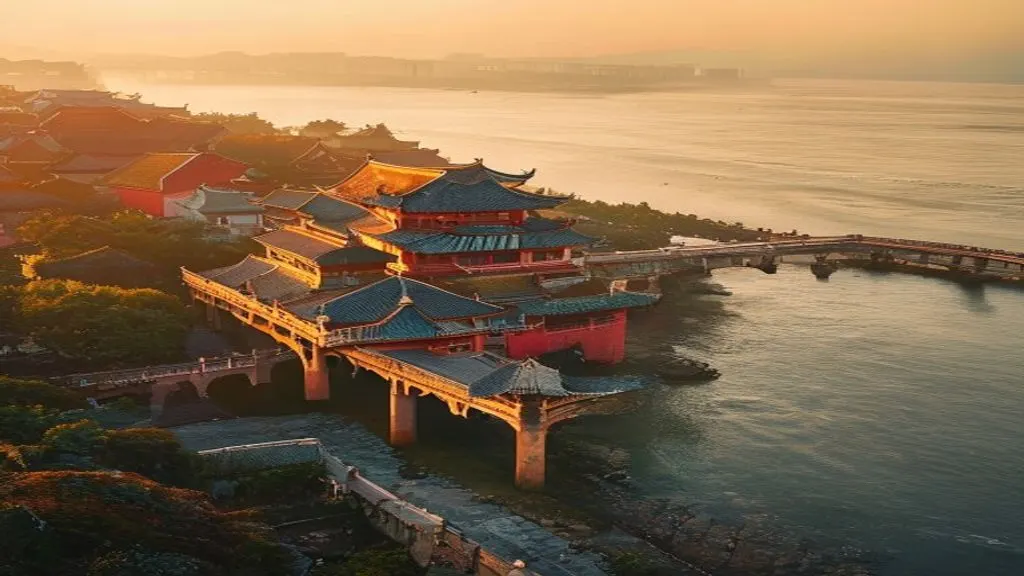
Qingdao est une ancienne concession allemande dont l'architecture coloniale aux toits rouges, les avenues arborées et la brasserie Tsingtao originale lui confèrent une personnalité unique parmi les villes côtières chinoises. Marchés de fruits de mer frais, huit plages de sable et le festival international de la bière annuel en font l'une des destinations estivales les plus agréables de Chine.
Flavour Profile
Meilleure période pour visiter
🗓 Mai à octobre
Province
📍 Shandong
Tier
Trésor cachéAbout Qingdao
Qingdao's German period was short but left the deepest mark on how the city looks today. Germany occupied the surrounding Kiaochou Bay area in 1897, following the killing of two German missionaries, and secured a 99-year lease the following year, administering the territory directly through its navy. That control ended abruptly in 1914, when Japan seized the city during the First World War, and Chinese sovereignty wasn't restored until 1922, after US-mediated negotiations at the Washington Naval Conference. In under two decades, German planners had already laid out the tree-lined streets and red-tiled rooflines that still define Qingdao's old town — most strikingly at St. Michael's Cathedral, whose twin bell towers and Romanesque Revival design, completed in 1934 by German architect Alfred Fräbel, remain the largest of their kind in Shandong province.
That same colonial period produced Tsingtao Brewery, founded in 1903 as an Anglo-German venture and pouring its first beer in December 1904 — still brewed in the city and still the namesake of Qingdao's summer International Beer Festival. Down at the waterfront, Zhanqiao Pier tells a parallel story of continuous expansion: built in 1892 as a 200-metre Qing-dynasty naval wharf, it was extended to 350 metres in 1901 and reached its current 440 metres in 1931, becoming the small, octagonal-pavilion-topped landmark that anchors nearly every photograph of the Qingdao skyline.
Beyond the German-era core, Badaguan — the "Eight Passes" district, named for eight sections of the Great Wall — is a quieter residential quarter of colonial-era mansions worth a slow walk rather than a checklist visit. Qingdao's eight public beaches and fresh seafood markets make it one of China's most livable summer cities; May through October brings warm water and the busiest but liveliest stretch of the calendar, beer festival included.
What to Eat in Qingdao
Fresh Clams
蛤蜊
Littleneck clams steamed or stir-fried — the unofficial city snack
Grilled Squid
烤鱿鱼
Whole squid chargrilled over coal on the famous Beer Street boardwalk
Tsingtao Beer
青岛啤酒
Poured ice-cold from a plastic bag at every street corner since 1903
Découvrir Qingdao par thème
Incontournables
St. Michael's Cathedral
→Shandong province's largest Romanesque Revival cathedral, its twin bell towers visible across much of the old German quarter.
Zhanqiao Pier
→A 440-metre pier topped with an octagonal pavilion, extending out into Qingdao Bay from the edge of the old town.
Badaguan
→A quiet residential district of colonial-era mansions along Qingdao's southern coast, named for eight historic sections of the Great Wall.
Tsingtao Brewery Museum
→The original site of Tsingtao Brewery, founded in 1903, now partly converted into a museum tracing the beer's German-Chinese origins.
Book Experiences in Qingdao
Nearby Cities

AI Trip Planner
Planning a trip to Qingdao?
Tell our AI your travel style and get a personalised itinerary in seconds
✨ Build my itinerary