四川, China
成都
天府之国
观看:Chengdu
成都以麻辣火锅、大熊猫和当地人称之为「悠闲生活」的慢节奏而闻名。这里是中国非官方的美食之都,也是最容易在接近自然的环境中看到大熊猫的地方。
口味特色
最佳旅行时间
🗓 3月至5月,9月至11月
所在省份
📍 四川
城市等级
必去关于Chengdu
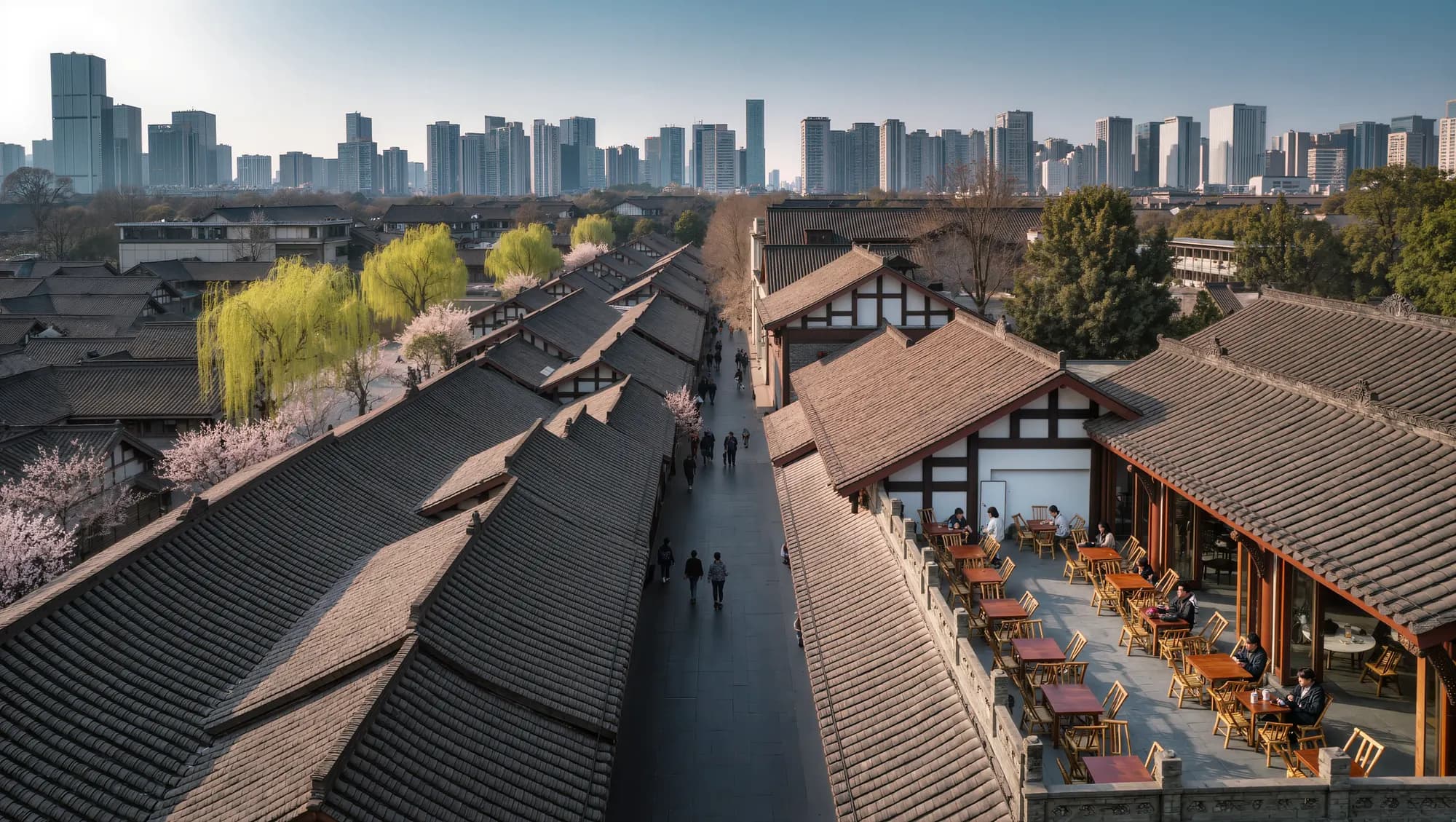
Chengdu doesn't move at the pace of the rest of urban China, and that's the point. Sichuan's capital has spent centuries as an inland trading hub protected by mountains on nearly every side, and that isolation bred a culture built around slowness: teahouses where old men shuffle mahjong tiles for entire afternoons, ear-cleaners working the alleys around People's Park, and a hot pot ritual that's less a meal than a two-hour social event. The food is the main draw for most visitors, and it earns the hype — Chengdu is the birthplace of "mala," the numbing-and-spicy combination of Sichuan peppercorn and chili that defines the province's cuisine, found everywhere from Michelin-adjacent restaurants to plastic-stool street stalls.
Pandas are the other reason people come, and Chengdu is genuinely the easiest place on earth to see them: the Chengdu Research Base is a short taxi ride from downtown and gets you close to dozens of pandas in a forested setting, best visited at opening time when they're most active. Beyond the city itself, Chengdu works well as a base for two significant day trips — the Leshan Giant Buddha, carved into a cliff face over a thousand years ago, and Mount Emei, one of China's four sacred Buddhist mountains, both reachable by high-speed rail in under two hours.
Chengdu's climate is humid and overcast for much of the year, which is part of why locals lean so hard on chili heat to begin with — spring (March to May) and autumn (September to November) offer the clearest skies and most comfortable temperatures, while summer brings heavy humidity and winter is grey and damp rather than cold. Three to four days is enough to cover the city's core sights and one day trip without rushing; pair it with Chongqing, three hours away by bullet train, for a fuller Sichuan-basin itinerary.
Chengdu地图
Chengdu必吃美食
Hot Pot
火锅
Communal cauldron of numbing-spicy tallow broth for dipping meats and vegetables
Mapo Tofu
麻婆豆腐
Silken tofu in fiery chilli oil laced with Sichuan peppercorn
Dan Dan Noodles
担担面
Springy noodles tossed with spicy sesame paste and minced pork
按主题探索Chengdu
亮点
Sichuan Hot Pot
→Bubbling pots of fiery mala broth where you cook thin-sliced meat, tofu, and vegetables at the table. Chengdu's numbing-and-spicy hot pot is considered the most authentic in China, with restaurants ranging from street-side stalls to multi-floor banquet halls.
Dan Dan Noodles
→Thin wheat noodles tossed in chili oil, Sichuan pepper, preserved vegetables, and minced pork. Named after the shoulder pole (dan dan) vendors once used to carry them through the streets.
Mapo Tofu
→Silky tofu in a fiery sauce of fermented broad bean paste, chili, and Sichuan pepper, finished with minced beef or pork. One of the defining dishes of Sichuan cuisine.
Chengdu Research Base of Giant Panda Breeding
→The most accessible place in the world to see giant pandas up close, set in a forested park just outside the city center. Arrive early morning when pandas are most active.
Wenshu Monastery
→A working Buddhist monastery dating to the Tang Dynasty, with incense-filled courtyards and a popular vegetarian teahouse. One of the best-preserved temples in the city.
Jinli Ancient Street
→A restored Qing Dynasty-style pedestrian street near the Wuhou Shrine, lined with snack vendors, teahouses, and shops selling Sichuan opera masks and local crafts.
Mount Emei
→One of China's Four Sacred Buddhist Mountains, with temples scattered along forested slopes leading up to a Golden Summit known for dramatic sunrise views and a sea-of-clouds effect. A common day-or-overnight trip from Chengdu.
Leshan Giant Buddha
→A seated Buddha carved directly into a cliff face overlooking the convergence of three rivers near Leshan, one of the largest stone Buddha statues in the world at over 70 meters tall. Built during the Tang Dynasty.