山西, China
平遥
中国保存最完好的明清古城
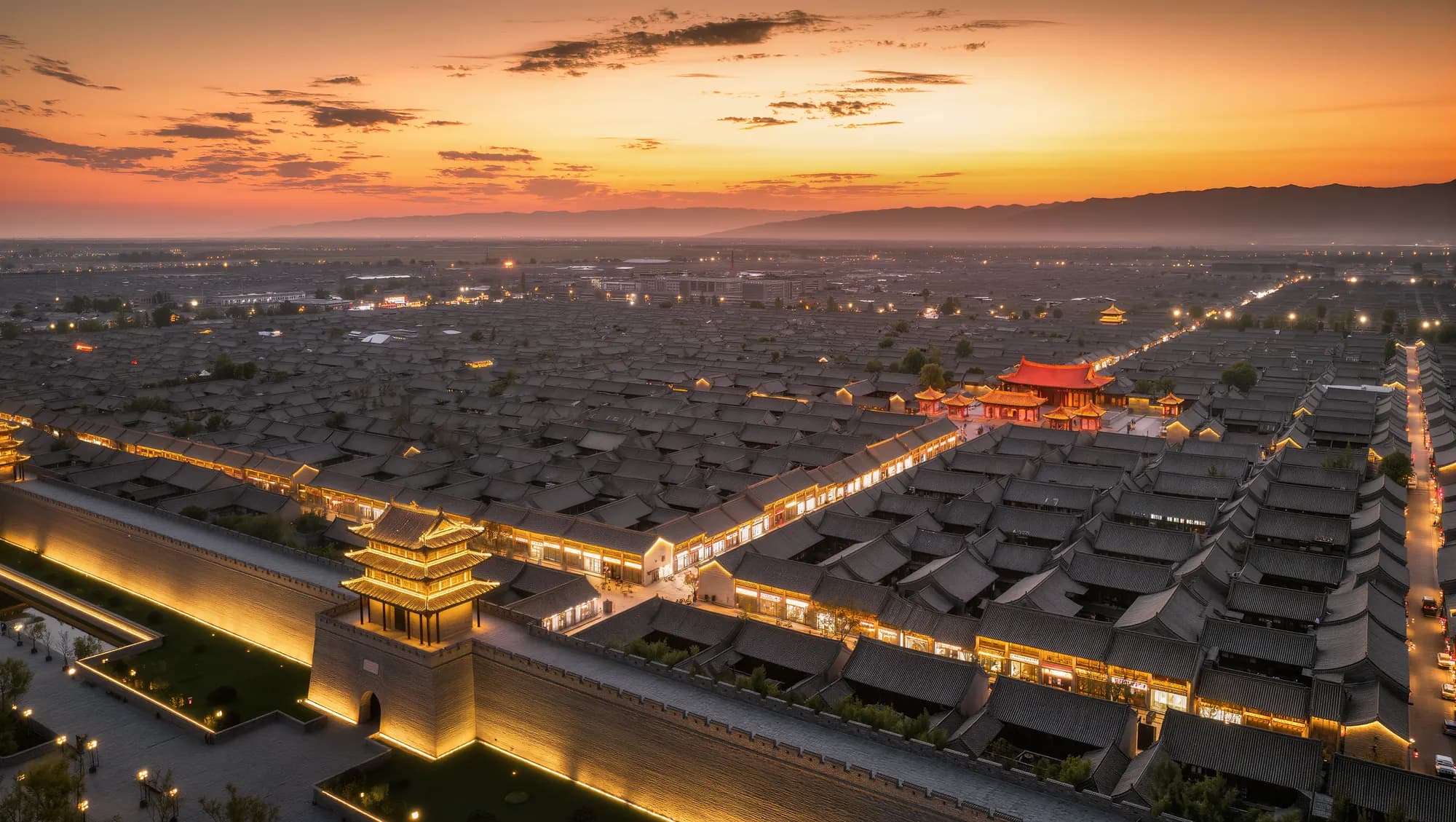
平遥是UNESCO世界遗产城市,其明代城墙、商人四合院和青石板街道600年来几乎原封未动。这里曾是清朝的金融中心——中国第一家票号和汇兑系统的发源地,如今为旅行者提供沉浸式的帝制时代体验,却没有北京或西安的拥挤人潮。
口味特色
最佳旅行时间
🗓 4月至5月,9月至10月
所在省份
📍 山西
城市等级
小众宝藏关于Pingyao
Pingyao's Ming-dynasty city walls, six kilometers around and still fully intact, enclose one of the only Chinese cities where the entire historic core — not just a restored central street — survived the 20th century's demolitions and rebuilding waves. Walk any side alley here and you're still inside the merchant courtyard houses and cobblestone lanes that defined the city 600 years ago, not a reconstruction of them.
That survival matters because of what Pingyao actually was: the financial capital of Qing-dynasty China. In 1823, a local dye-shop owner reorganized his business into the Rishengchang Piaohao, China's first draft bank, letting merchants transfer money across the country via letter of credit instead of physically hauling silver. At its 19th-century peak, Rishengchang alone ran more than 35 branches across China and into Russia, Mongolia, and Japan, and Pingyao's banks collectively handled a huge share of the empire's money supply before Shanghai took over as the financial center. The original Rishengchang building survives as a museum, its courtyards and vaults still largely as they were.
Unlike Beijing or Xi'an, where major sites are spread across a sprawling modern city, Pingyao's entire old town is compact enough to walk in a day, though staying overnight inside the walls — many old courtyard houses now operate as guesthouses — is what actually makes the city feel alive after the day-trip crowds leave. April–May and September–October bring the most comfortable temperatures for walking the walls and alleys at length.
Pingyao必吃美食
Pingyao Beef
平遥牛肉
Air-dried and slow-braised beef, a Ming dynasty curing tradition
Bowl Cake
碗托
Buckwheat noodle cakes eaten cold with vinegar, chilli oil, and garlic