甘肃, China
敦煌
丝绸之路的咽喉与戈壁大漠
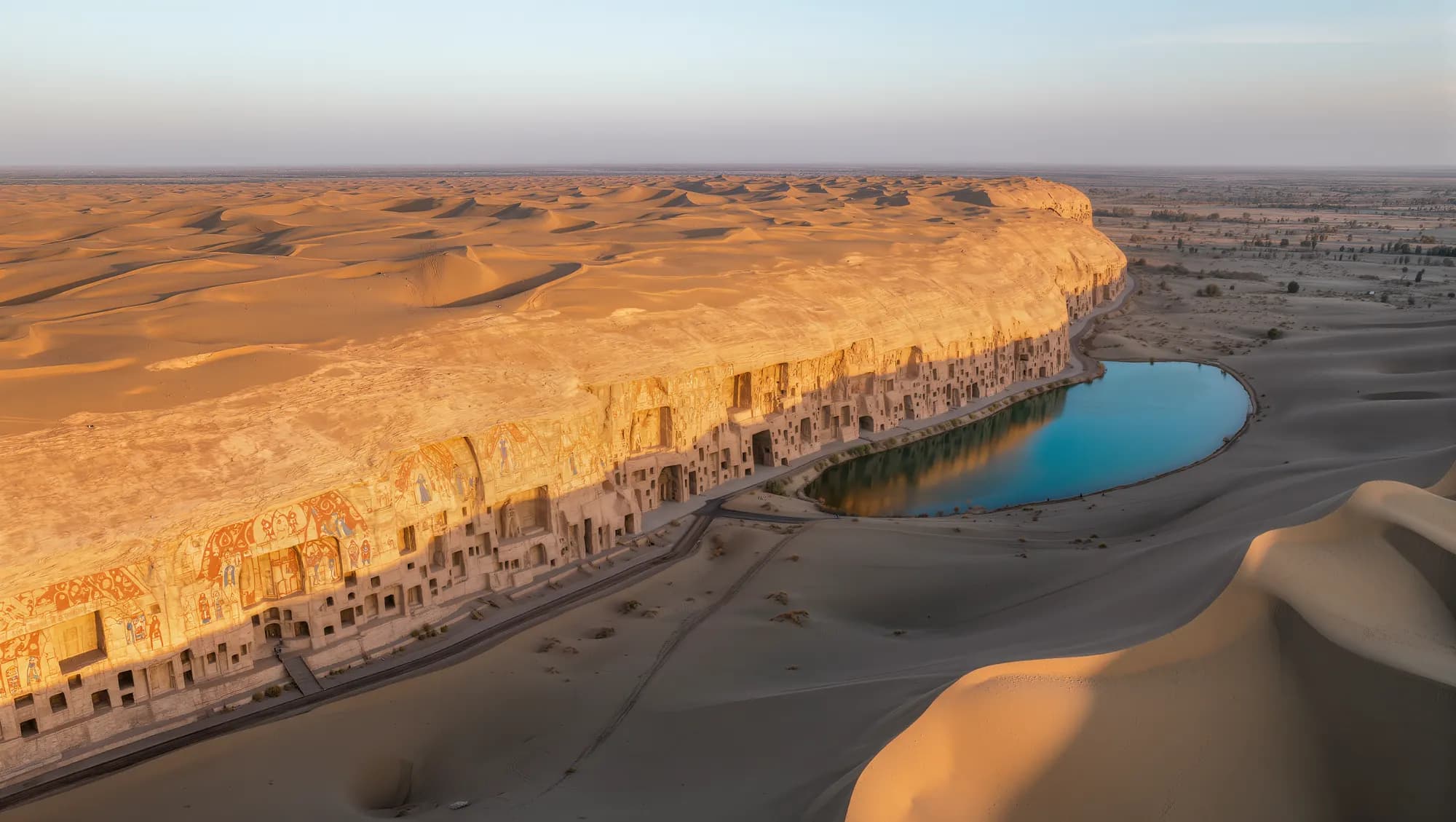
敦煌地处戈壁沙漠边缘,是古丝绸之路南北两道的分叉口,曾是历史上最重要的商贸十字路口之一。UNESCO世界遗产莫高窟内保存着逾4.5万平方米的唐代佛教壁画,是全球规模最大的佛教艺术宝库;附近的月牙泉绿洲与鸣沙山则构成令人叹为观止的自然景观。
口味特色
最佳旅行时间
🗓 4月至6月,9月至10月
所在省份
📍 甘肃
城市等级
小众宝藏关于Dunhuang
Dunhuang sits where the Silk Road forked into its northern and southern routes around the Taklamakan Desert, which made it one of the great crossroads of the ancient world — a place where Chinese, Central Asian, Indian, and Persian traders, monks, and ideas all passed through and left something behind. That layered history is most visible at the Mogao Caves, a UNESCO World Heritage site holding roughly 45,000 square meters of Buddhist murals and over 2,000 painted sculptures across nearly 500 surviving caves, carved and painted continuously from the 4th to the 14th century — the largest and most continuous collection of Buddhist art anywhere on earth.
Far fewer visitors make it out to Yumen Pass, a crumbling rammed-earth fort standing alone in open Gobi desert that once controlled traffic along the Silk Road's northern route. Where Mogao draws organized tour groups on a timed-ticket system, Yumen Pass is just wind, sand, and a 2,000-year-old ruin with almost no other structures in sight — a useful contrast to how curated the Mogao experience has become.
Dunhuang's other identity is as a desert oasis town: Crescent Lake, a narrow crescent-shaped pool that has somehow persisted for centuries in the middle of the Singing Sand Dunes, is the classic image of the region, and climbing or sandboarding the dunes at sunset is as much a part of a Dunhuang visit as the caves themselves. April–June and September–October avoid both the harsh winter cold and the peak summer heat, and Mogao tickets should be booked in advance since daily visitor numbers are capped.
Dunhuang必吃美食
Hand-Pulled Noodles
拉条子
Silky pulled noodles tossed with roasted peppers and braised lamb
Roast Whole Lamb
烤全羊
Cumin-spiced lamb slow-roasted over desert charcoal until golden