Gansu, China
Dun Huang
Puerta de la Ruta de la Seda y el desierto de Gobi
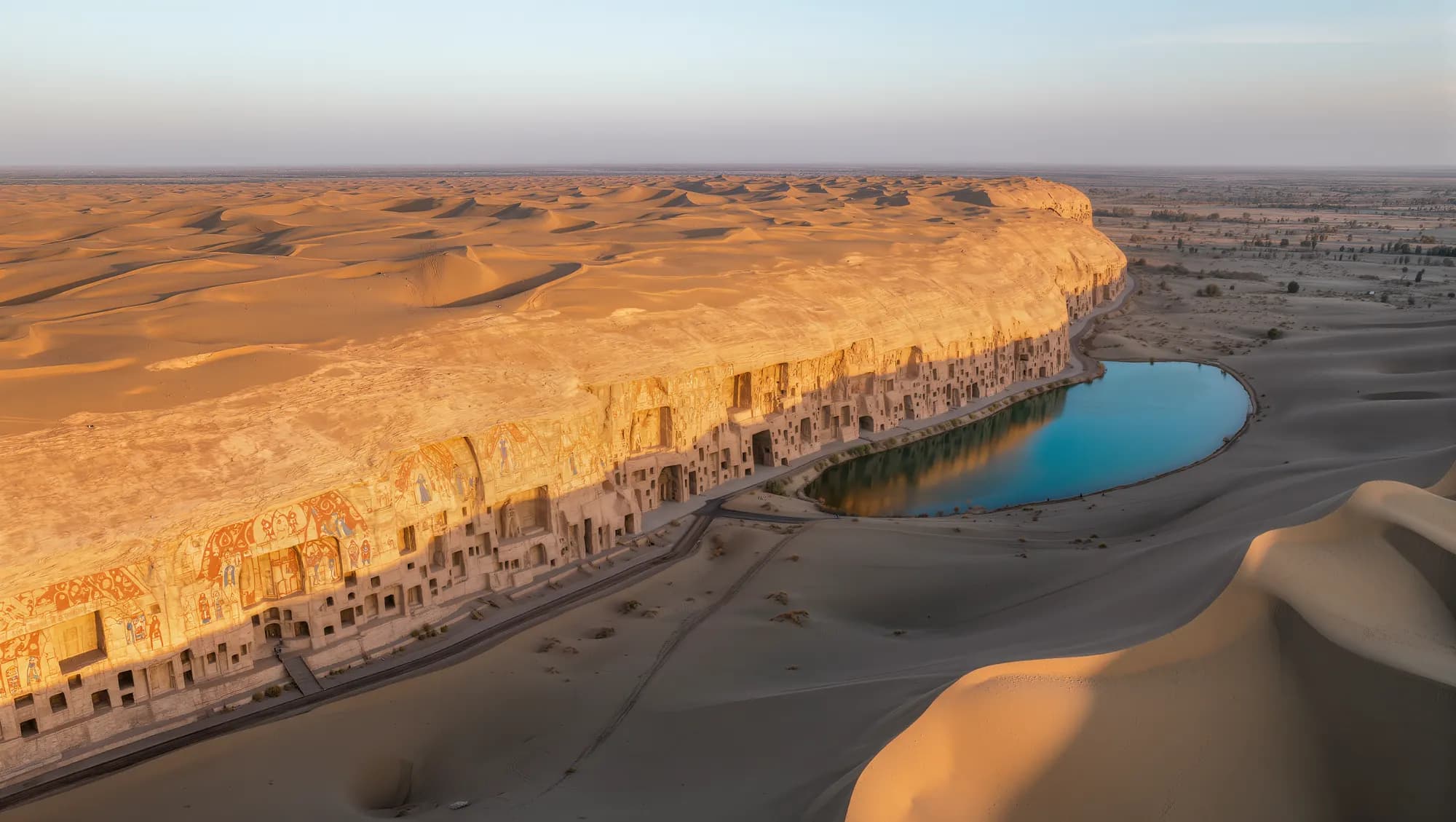
Dunhuang se sitúa al borde del desierto de Gobi, donde la antigua Ruta de la Seda se bifurcaba en rutas norte y sur, convirtiéndola en uno de los grandes cruces de caminos de la historia. Las Cuevas de Mogao, declaradas Patrimonio de la Humanidad por la UNESCO, albergan más de 45.000 metros cuadrados de murales budistas de la dinastía Tang —la mayor colección de arte budista del mundo—, mientras que el Lago de la Luna Creciente y las Dunas Cantoras ofrecen un espectacular contraste natural.
Flavour Profile
Mejor época para visitar
🗓 De abril a junio, de septiembre a octubre
Province
📍 Gansu
Tier
Joya escondidaAbout Dunhuang
Dunhuang sits where the Silk Road forked into its northern and southern routes around the Taklamakan Desert, which made it one of the great crossroads of the ancient world — a place where Chinese, Central Asian, Indian, and Persian traders, monks, and ideas all passed through and left something behind. That layered history is most visible at the Mogao Caves, a UNESCO World Heritage site holding roughly 45,000 square meters of Buddhist murals and over 2,000 painted sculptures across nearly 500 surviving caves, carved and painted continuously from the 4th to the 14th century — the largest and most continuous collection of Buddhist art anywhere on earth.
Far fewer visitors make it out to Yumen Pass, a crumbling rammed-earth fort standing alone in open Gobi desert that once controlled traffic along the Silk Road's northern route. Where Mogao draws organized tour groups on a timed-ticket system, Yumen Pass is just wind, sand, and a 2,000-year-old ruin with almost no other structures in sight — a useful contrast to how curated the Mogao experience has become.
Dunhuang's other identity is as a desert oasis town: Crescent Lake, a narrow crescent-shaped pool that has somehow persisted for centuries in the middle of the Singing Sand Dunes, is the classic image of the region, and climbing or sandboarding the dunes at sunset is as much a part of a Dunhuang visit as the caves themselves. April–June and September–October avoid both the harsh winter cold and the peak summer heat, and Mogao tickets should be booked in advance since daily visitor numbers are capped.
What to Eat in Dunhuang
Hand-Pulled Noodles
拉条子
Silky pulled noodles tossed with roasted peppers and braised lamb
Roast Whole Lamb
烤全羊
Cumin-spiced lamb slow-roasted over desert charcoal until golden
Explorar Dunhuang por tema
Lo más destacado
Book Experiences in Dunhuang
Nearby Cities
AI Trip Planner
Planning a trip to Dunhuang?
Tell our AI your travel style and get a personalised itinerary in seconds
✨ Build my itinerary