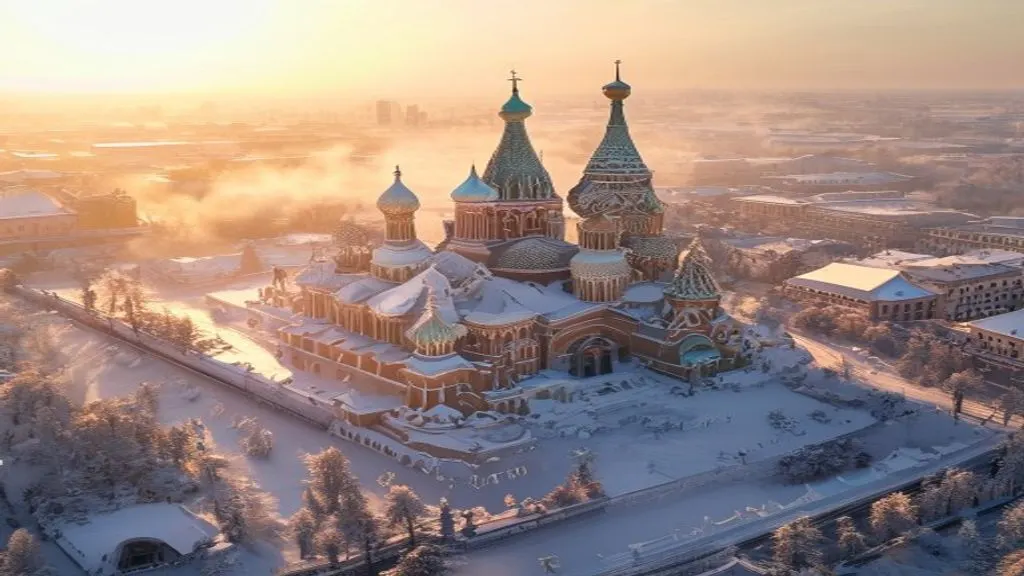
哈尔滨每年1月摇身变为冰雪童话世界,举世闻名的冰雪大世界中,纯冰雕琢而成的摩天楼在灯光下璀璨夺目。中央大街两侧矗立着俄罗斯风格的巴洛克建筑,而东北菜的熏肉、猪肉炖粉条与饺子,在零下20度的寒冬里给人最温暖的慰藉。
口味特色
最佳旅行时间
🗓 12月至2月,6月至8月
所在省份
📍 黑龙江
城市等级
精选关于Harbin
Harbin doesn't look like anywhere else in China, and the reason traces back to a single railway. When Russia built the Chinese Eastern Railway through Manchuria at the turn of the 20th century, Harbin grew almost overnight from a fishing village into a Russian-run rail hub, and the city inherited a European skeleton it never shed: onion domes, Baroque facades, and street grids laid out by Russian engineers rather than the courtyard logic of older Chinese cities. Central Street, cobblestoned since 1898 and lined for 1.4 kilometers with Baroque- and Byzantine-influenced buildings, is the clearest surviving trace of that era, now filled with bakeries, ice cream vendors, and the kind of unhurried evening stroll locals favor even in the cold.
Saint Sophia Cathedral, the onion-domed brick church finished in 1907 and expanded through the 1920s, is Harbin's most photographed building, though it hasn't held a Mass in decades — it was converted into the Harbin Architecture Art Gallery in 1997 and today displays old photographs of the city rather than icons. Winter is when Harbin becomes genuinely singular: the Ice and Snow Festival, with roots in a 1963 ice-lantern gathering and formalized in 1985, turns entire blocks of the city into illuminated ice architecture — full-scale, walkable buildings carved from river ice and lit from within, running from late December into February. Sun Island, across the frozen Songhua River, hosts much of the snow-sculpture side of the festival, and the Siberian Tiger Park nearby lets visitors watch some of the world's last wild-bred Siberian tigers from the safety of a caged bus, rather than the other way around.
Harbin's winters are brutal — nighttime temperatures regularly drop past −20°C, and dressing for it is not optional — but that cold is also the point: dongbei (northeastern) food leans hearty and warming, built around smoked and cured meats, hand-pulled noodles, and pork-and-cabbage stews meant to be eaten fast before they cool. Visitors who can't handle the winter cold have a second window in June through August, when the city is mild and green, though without the ice sculptures. Two to three days covers Central Street, the cathedral, and one of the ice/tiger attractions comfortably; Harbin pairs naturally with a wider Northeast China itinerary via Shenyang or Changchun, both reachable by rail.
Harbin地图
Harbin必吃美食
Da Lie Ba Bread
大列巴
Dense sourdough loaf from the city's Russian immigrant heritage
Harbin Red Sausage
哈尔滨红肠
Smoky pork sausage brought by Soviet advisers, now a city icon
Ma Die Er Ice Cream
马迭尔冰糕
Classic vanilla ice lolly eaten outdoors at −20°C — a Harbin rite of passage
按主题探索Harbin
亮点
Central Street
→A 1.4-kilometer pedestrian street first paved in 1898, lined with Baroque, Byzantine, and Renaissance-style buildings from Harbin's era as a Russian railway hub.
Saint Sophia Cathedral
→An onion-domed red-brick Russian Orthodox church completed in 1907 and expanded through the 1920s, converted in 1997 into the Harbin Architecture Art Gallery.
Siberian Tiger Park
→A large conservation park on the north bank of the Songhua River housing several hundred Siberian tigers, the largest population of the subspecies anywhere in the world.
Harbin Ice and Snow World
→The centerpiece venue of Harbin's winter festival, where entire full-scale buildings, bridges, and slides are carved from river ice and lit from within after dark.